Exposure of Impacted Teeth
What is an impacted tooth?
An impacted tooth simply means that a portion of the crown is within the bone and cannot erupt into function. Most commonly, patients develop problems with impacted third molar (wisdom) teeth. This is because often times the mouth and jaws are too small to accommodate them. If a wisdom teeth are not removed, they can cause pain in the back of the jaw, painful infections, among a host of other problems (see Wisdom Teeth under Procedures). Since there is rarely a functional need for wisdom teeth, they are usually extracted prior to development of these problems.
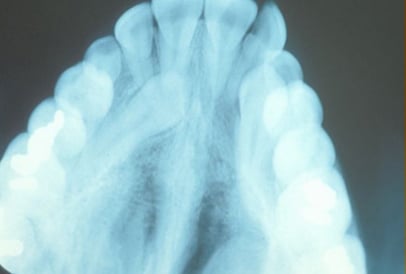
The maxillary cuspid (upper “Canine”) is the second most common tooth to become impacted. The canine tooth is a critical tooth and plays an important role in your bite and cosmetics. The canine teeth are very strong biting teeth, and have the longest roots of any human teeth.
Normally, the maxillary canine teeth are the last of the “front” teeth to erupt into place. They usually come into place around age 13 and cause any space left between the upper front teeth to close tighter together. If a canine tooth gets impacted, every effort is made to get it to erupt into its proper position. The techniques involved to aid eruption can be applied to any impacted tooth in the upper or lower jaw, but most commonly they are applied to the maxillary canine teeth. The majority of these impacted canines are located on the palatal (roof of the mouth) side of the dental arch. The remaining impacted canine teeth position can be developing in an elevated position above the roots of the adjacent teeth, or are out to the facial side of the dental arch.
Early Recognition of Impacted canine Is the Key to Successful Treatment
The older the patient the more likely an impacted canine will not erupt by natural forces alone, even if the space is available for the tooth to fit in the dental arch. A panoramic x-ray or cone beam CT scan, along with a dental examination, will help determine whether all the adult teeth are present or if some adult teeth are missing.
Treatment often requires referral to Dr. Stanford for evaluation to determine if any extractions of primary (baby) teeth is indicated. Often times, canine teeth require surgical exposure followed by bonding of a metal bracket in attempt to have the orthodontist facilitate eruption.
Exposure and Bracketing of an Impacted Cuspid
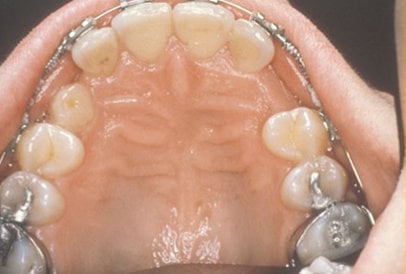
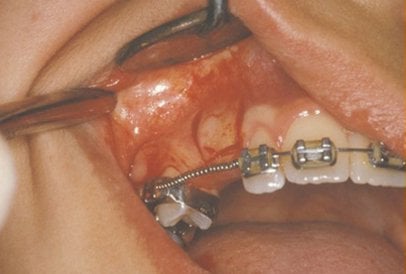
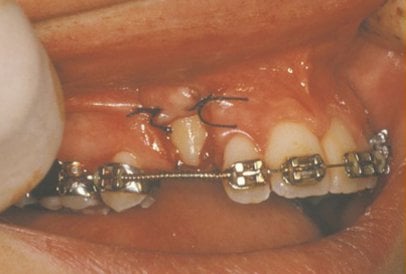
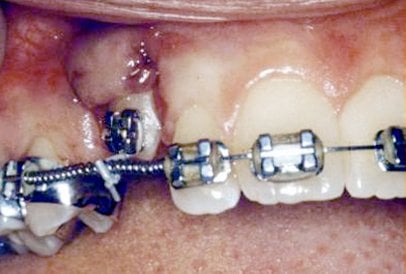
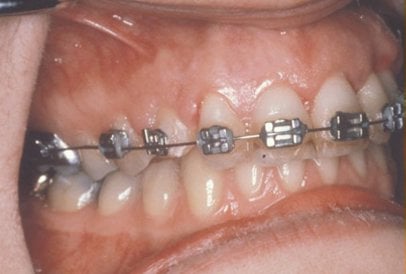
What to expect from surgery to expose & bracket an impacted tooth
The surgery to expose and bracket an impacted tooth is usually a straightforward surgical procedure that is performed in the oral surgeon’s office. For most patients, it is performed using local anesthesia or deep sedation. These issues will be discussed in detail at your preoperative consultation with your doctor.
Refer to Preoperative Instructions under Surgical Instructions on this website for a review of any details. Simply call Cypress Bend Oral and Maxillofacial Surgery at Lafayette Office Phone Number 337-352-BEND (2363) if you have any questions.
Cypress Bend Oral and Maxillofacial Surgery
Our Latest Patient Testimonial
I have to say everything about this place is awesome! My son has bad anxiety, learning disability, and autism and he even felt very comfortable. Dr. Stanford and his staff and the sweetest and are very knowledgeable. I definitely recommend this place!
- Brooke B