

Bone Grafting for Implants
Do I have enough bone for dental implants?
When an adult tooth is removed and not replaced, jaw bone resorption may occur. Natural teeth are embedded in the jaw bone and stimulate the jaw bone through activities such as chewing and biting. When teeth are missing, the alveolar bone, or the portion of the jaw bone that anchors the teeth in the mouth, no longer receives the necessary stimulation and begins to break down, or resorb. The body no longer uses or “needs” the jaw bone, so it resorbs, deteriorates, and goes away.
The rate that the bony resorption varies greatly among individuals. However, the most rapid loss occurs within the first 12-18 months following the extraction and will continue gradually throughout your life if not addressed.
After tooth extraction, as discussed above, this can be accompanied by resorption of the surrounding alveolar bone resulting in a bony defect at the site of extraction. This process can be prevented by a procedure referred to as “socket preservation” in which a bone grafting material is placed into the tooth socket at the time of extraction. This step will help maintain the width and volume of bone you will need for implant placement several months later.
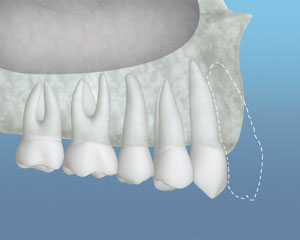
1. Inadequate Bone
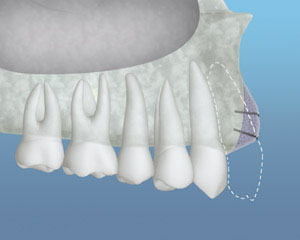
2. Graft Material Placed
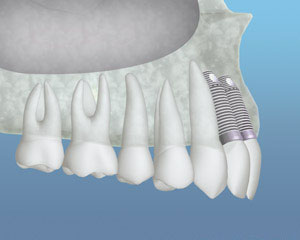
3. Implants Placed
As discussed above, if your tooth was removed many years prior, there may be inadequate bone for implant placement. In this case, Dr. Stanford can perform a surgery called “guided bone regeneration” in which a bone graft can be placed in the area of the bony defect and allowed to heal for up to 6 months. After the graft has healed, Dr. Stanford can place the implant. Many different bone-grafting materials are available, including your own bone. Dr. Stanford will discuss with you which bone grafting product would best suit your needs.
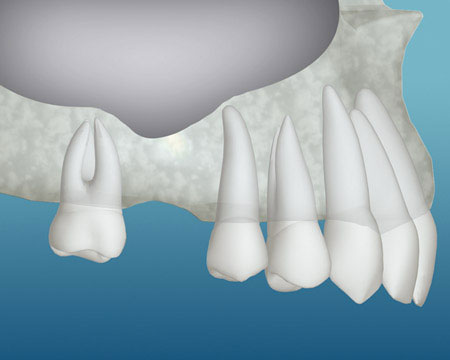
1. Inadequate Bone
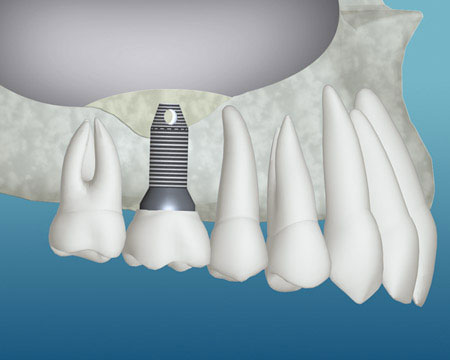
2. Graft Material and Implant Placed
When larger upper teeth (molars) are extracted, these three rooted teeth can leave behind large bony defects in the soft maxillary bone. This may require bone grafting if you desire implants to replace your missing teeth. In some instances, the maxillary sinus cavities above your upper jaw can be large, or very low, and extend into the tooth-bearing areas. When an upper tooth is extracted, a process called “pneumatization” can occur with your maxillary sinus. This often occurs when teeth in the back of a person’s upper jaw have been removed many years before, and the amount of bone available for implant placement is limited. A “sinus grafting procedure” is then required. During this procedure, the membrane that lines the sinus will be located and elevated. Bone will then be added to restore the bone height and ensure that dental implants of an adequate size can be placed.