
Missing All Lower Teeth
Many people find it difficult to wear and eat with lower dentures. Several implant-supported replacement options are available if you are missing all of your lower teeth.
Locator Abutment Over-Denture
A very common option is to have two implants placed in your lower jaw. A “Locator Abutment” will be attached to each of the implants once implant healing is complete. This option allows your lower denture “snap” onto the implants resulting in improved stability and retention while chewing and biting. As with all removable replacement teeth, you may will need periodic appointments for denture adjustment for any sore spots they may develop.
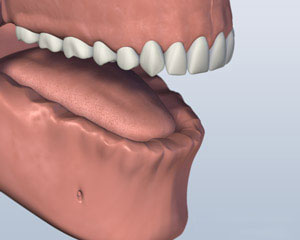
1. Before
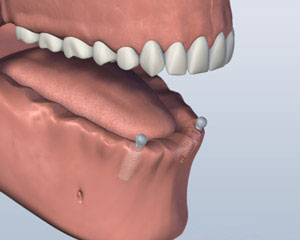
2. Implants Placed
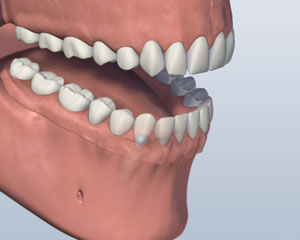
3. Denture Attached
Screw Retained Denture AKA “Hybrid”
Another option involves an acrylic denture, with a metal frame work built inside of it, that screws in place and does not come out on a daily basis. This involves placing 4-6 implants and attaching the permanent denture to your implants. Your denture is then secured in place by screws. The prosthesis does not touch the gum tissue. This allows you to clean under the denture without removing it. This denture will replace all your missing lower teeth and will not be removed except by your dentist at routine maintenance visits. Although cleaning under your denture without removing it is more time consuming and requires more dexterity, many patients who want “something that is not removable” prefer this option. Dr. Stanford will discuss the pros and cons of implant surgery regarding this choice.
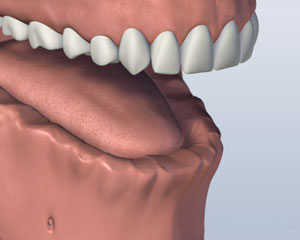
1. Before
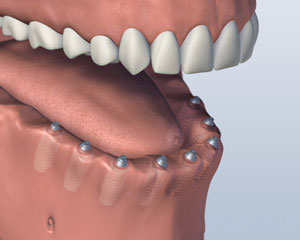
2. Implants Placed
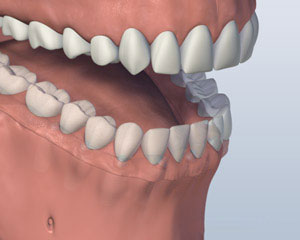
3. Denture Attached
Individual Implants (Multiple crowns and bridges)
Another option is to have your teeth individually replaced with multiple implants in combination with bridges. This is a more esthetic option and will most closely resemble the appearance of your natural teeth. This option usually requires at least 6 implants which are restored with multiple fixed crowns and bridges.
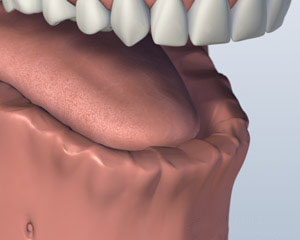
1. Before
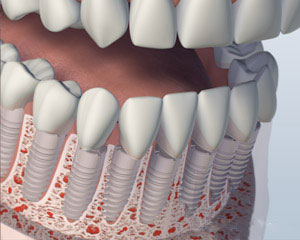
2. Implants Placed
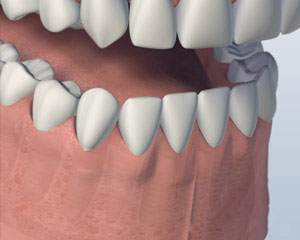
3. Healing Completed
What if I’m missing all of my upper teeth?
A similar range of treatment options is also available for your upper jaw. However, because the bone is not as hard (less dense) compared to the lower jaw, people often need more implants to support their replacement teeth. If you would like to replace all of your teeth on your upper jaw, you will require at least 4-6 implants regardless of the tooth prosthesis you choose. Depending upon the number of implants to be placed, it may be possible to eliminate the need for covering the roof of your mouth (palate) with a complete denture. This option allows you to fully taste your food and gives you a better sense of its temperature. Your denture may feel more natural.
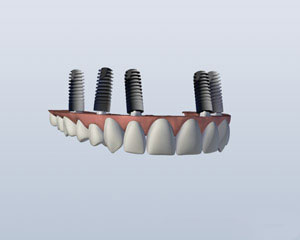
Locator Abutment Over-Denture
Since the upper jaw is less dense (less hard) compared to the lower jaw, there is a minimum of 4 implants that will be required to hold your denture in place. A “Locator Abutment” will then be attached to each of the implants once implant healing is complete. This option allows your upper denture to “snap” onto the implants resulting in improved stability and retention while chewing and biting. As with all removable replacement teeth, you may will need periodic appointments for denture adjustment for any sore spots they may develop.
Screw Retained Denture AKA “Hybrid”
Another option involves an acrylic denture, with a metal framework built inside of it, that screws in place and does not come out on a daily basis. This involves placing 4-6 implants and attaching the permanent denture to your implants. Your denture is then secured in place by screws.
The prosthesis does not touch the gum tissue. This allows you to clean under the denture without removing it. This denture will replace all your missing upper teeth and will not be removed except by your dentist at routine maintenance visits. Although cleaning under your denture without removing it is more time consuming and requires more dexterity, many patients who want a “something that is not removable” prefer this option. Dr. Stanford will discuss the pros and cons of implant surgery regarding this choice.
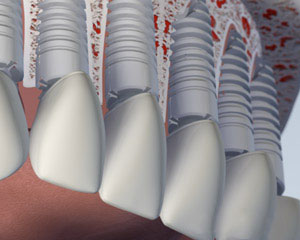
Individual Upper Implants
Another option is to have fixed crown and bridges to replace your upper teeth. This option secured the teeth to the implants. This option would require at least 6 implants likely in combination with bone grafting of the maxillary sinus. Fixed crown and bridge is considered by most dentists to be the most expensive but most esthetic restoration option and is similar in appearance to your natural teeth.